Why I work as a one-person team, from design to launch
I work alone: the person on your first call is the same one who designs, builds, launches and supports your project. That cuts out the game of telephone and speeds up decisions, but it has limits worth knowing before we start.
I work alone. When you reach out about a website, custom software, an app or a 3D configurator, the person who answers is the same person who designs it, builds it, launches it and handles changes later. There's no salesperson up front and no team you never meet in the back.
It isn't a phase until I “grow into an agency.” It's how I chose to work. Here's why, what you get out of it, and, just as honestly, where it falls short. That way you can decide with everything on the table.
What gets lost between people
On a project with lots of hands, what you say in the first meeting goes through several filters before it reaches whoever builds it. A salesperson sums it up, someone turns it into a document, a designer reads the document and a developer reads the design. Each step drops a detail.
And details are exactly what makes a tool fit your business instead of one that looks like it. Your customers ask for quotes over WhatsApp, not through a form. Saturday is your busiest day for inquiries. Your sales rep isn't a computer person, so everything has to work on a phone.
When the person listening is the person building, those details stay. If you mentioned something on our first call, I remember it when I'm working on the screen where it matters.
Faster decisions, fewer meetings
Working alone also changes the pace. If you tell me in a review that a button is confusing, nobody has to file a ticket, wait for it to be assigned and loop in another department. I change it and send you the link.
Reviews are short and about real things. You see actual progress on your phone or computer, you sign off on each stage before we move on, and I don't have to relay your decisions to anyone else. I go through the whole process in working with a remote developer.
I know how everything I hand over works
Since I design, build and launch it myself, I know every part of what you get. If you want to add something down the road, nobody has to piece together who did what and why. I already know.
That also forces me to keep things tidy. Whatever I leave behind has to make sense to someone else, because the code, the domain and the logins belong to you, not me. If one day you want to move to another developer, you can. I explain why that matters in who owns your website code.
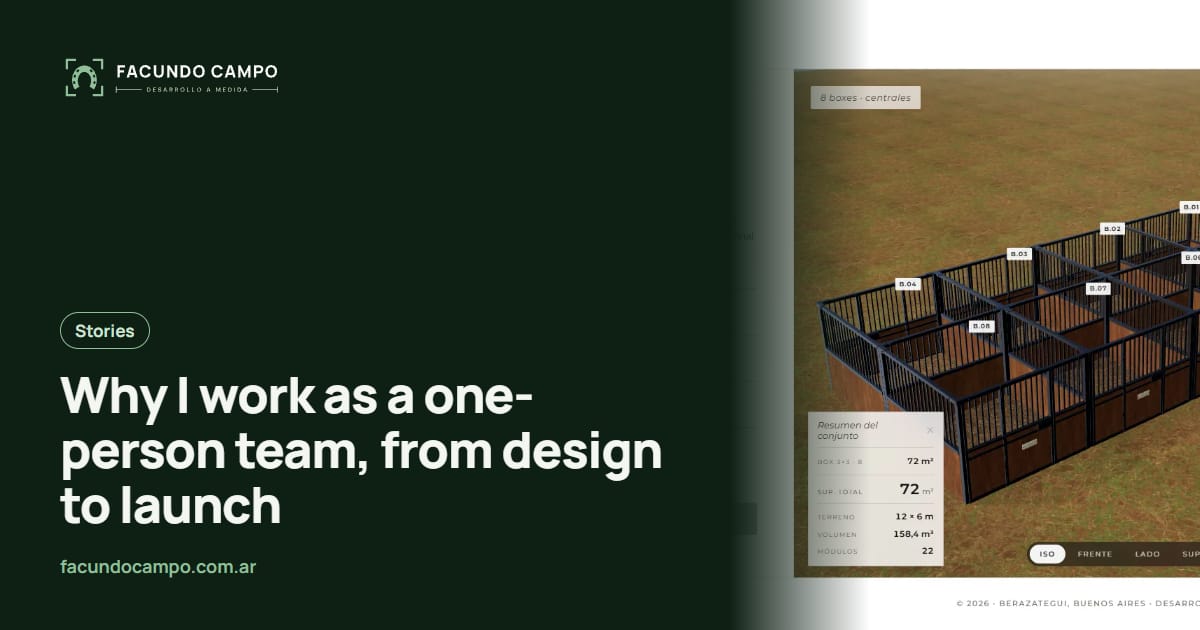
My own products, like LeadsLocales, which finds businesses by industry and area for agencies and freelancers in Argentina, and Estructuras 3D, a configurator for metal buildings, homes and horse stalls, are built and maintained the same way: start to finish, by me.
The limits, straight up
Working solo isn't better for everything. I'd rather you know before we start:
- I take on a few projects at a time. If my schedule is full, I'll tell you and give you a real start date instead of starting halfway.
- I don't do every job. I'm not a photographer, I don't run social media, and I only write in English and Spanish. I'll help you figure out what you need and what to ask for.
- I'm not a substitute for a large team. If you need a lot of people working in parallel to ship something huge on a tight deadline, I'll say so. That calls for something else.
- There's only one of me. That's why I plan in phases and give you plenty of notice when I'll be away.
How I make up for those limits
The answer is structure. I split every project into short phases, and each one leaves you with something you can already use: the most valuable piece first, the rest after. Bigger projects get built that way, one part at a time, as I describe in building software in phases.
I also build everything so you can run it without me. At Boca de Lobo, a steakhouse with two locations in Buenos Aires, the staff updates prices, dishes and promotions on a menu with over 250 items from their own dashboard. That's the goal: I should never be the bottleneck in your business.
Who it makes sense for
Working with one person tends to suit business owners who want to talk to the person building their tool, who like to make decisions quickly, and who appreciate plain explanations without jargon. Shops, professional practices, manufacturers and small companies that need something built around how they work, not a generic product.
If you're still weighing your options, freelance developer or agency is an honest comparison, and my projects page shows what I've built.
Frequently asked questions
What happens if you get sick or go on vacation?
I let you know well in advance when I'll be away, and we plan around it. The code, the domain and the logins are in your name, so your website or system keeps running whether or not I'm available.
Can you handle a big project?
Many of them, yes, if we build it in phases: the most useful part first, then the rest. If your project needs several people working in parallel to launch quickly, I'll tell you upfront, because that's when a team makes more sense.
Do you also handle copy, photos or social media?
No. I help you work out what content your site needs and write the basics, but professional photography and social media are separate jobs. If you don't have anyone, I'll tell you what to ask for.
Who do I talk to during the project?
Me, every time. WhatsApp or email for day-to-day questions, and video calls for reviews. I'm in Argentina (UTC−3), which overlaps with business hours across most of the Americas and the afternoon in Europe.
If you'd like to tell me about your project and hear upfront whether I'm the right fit, message me on WhatsApp at +54 9 11 6193-3176 or email contacto@facundocampo.com.ar. I answer in English and Spanish and quote each project separately. You can also use the [contact page](/en/contacto).