Website bookings with deposits: how to cut no-shows with appointments confirmed by payment
A website booking with a deposit is an appointment that’s only confirmed once the customer pays part of it upfront, under a clear cancellation policy. It’s one of the most direct ways to cut no-shows in businesses that run on appointments or table reservations.
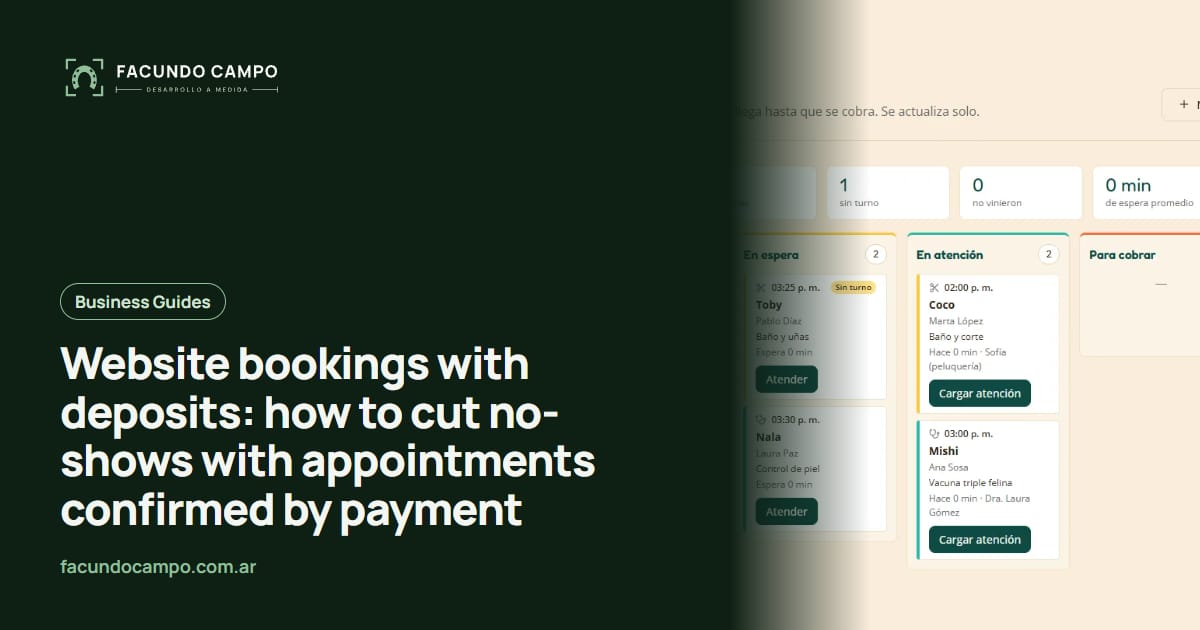
A website booking with a deposit is an appointment that’s only confirmed once the customer pays part of it upfront, under a clear cancellation policy. It’s one of the most direct ways to cut no-shows in businesses that run on appointments or reservations: hair salons, beauty and med spas, clinics, tattoo studios, sports courts, restaurants, rentals.
A slot nobody shows up for is time you never get back. Here’s how online deposits work, what to put in your cancellation policy, and how to keep it simple for customers. I won’t suggest amounts: every business sets its own.
Why do people skip appointments?
Most no-shows aren’t malicious. The customer booked days ahead, their day fell apart and they didn’t let you know because it felt awkward, or because canceling meant calling during business hours. Some book at two places and go to whichever suits them. And some simply forget.
A deposit goes straight at that: commitment. Once the customer has paid something, the appointment becomes theirs, not a “we’ll see”. And if they can’t make it, they have a real reason to tell you in time and reschedule.
It doesn’t replace automatic appointment reminders; it works alongside them. Reminders stop people forgetting; deposits stop people booking casually.
How does booking with a deposit work on a website?
The customer’s path, step by step:
- They pick the service, day and time on your website, seeing only open slots.
- They read the policy on deposits and cancellations, short and before paying.
- They pay the deposit right there, with a method they already use, like a card or a local payment app.
- They get a confirmation by WhatsApp, text or email, with the booking details and a link to change or cancel.
- If they don’t pay within the window you set, the slot frees up automatically.
- On the day, the deposit already shows as paid and comes off the total.
What should your cancellation policy say?
The policy is what makes deposits work without arguments. It should be short, visible before paying, and answer three questions:
Until when can I cancel or reschedule without losing the deposit? For example, “up to the day before your appointment”. You set the notice period for your trade.
What if I cancel after that or don’t show up? For example, the business keeps the deposit.
What if the business cancels? It’s always refunded or rescheduled. Saying so builds trust.
Write it in plain language, no fine print. And apply it the same way to everyone: if you let it slide one day and not the next, the policy stops meaning anything. For how to record and invoice deposits, and what consumer protection rules say where you operate, check with your accountant or a local professional.
Who should pay a deposit, and who shouldn’t?
You don’t need to charge everyone a deposit. Many businesses only use it where a no-show costs the most:
Long services or ones that take prep. A color appointment at the salon, a long tattoo session, a treatment that needs supplies set aside.
High-demand slots. Saturday mornings, the last slot of the evening, holidays and special dates.
New customers. A regular who always shows up books without a deposit; a first-timer books with one.
The system can be set up with those rules so they apply on their own. If you run a salon, see salon booking system; for a practice or clinic, online appointment booking for clinics.
Open booking, booking with reminders or booking with a deposit?
| Open booking | With reminders | With a deposit | |
|---|---|---|---|
| Customer commitment | Low. | Medium. | High. |
| Forgetting | Common. | Rare. | Rare. |
| “Just in case” bookings | Lots. | Some. | Almost none. |
| Slot freed if unconfirmed | No. | If someone does it by hand. | Automatically, when the window closes. |
| Best for | Short services and regulars. | Most appointments. | Long services, peak slots and new customers. |
A real project with online booking: Mecohue
For Mecohue, a pet shop with a vet clinic and dog grooming near Buenos Aires, I built the website with a catalog, services and appointments, plus an internal system with the cash register, appointments and one-tap WhatsApp reminders. You can see the site at mecohuepetshop.com.ar.
It doesn’t take deposits, but it shows the foundation they’d sit on: customers book on their own from the website, the business sees it in its system and the reminder goes out ready-made. Asking for a deposit just adds one more step to that same path.
See the Mecohue projectWhen is it worth building it custom?
If you work solo with simple services, an off-the-shelf booking tool that takes deposits may be all you need. Custom makes sense when your rules are your own (deposits only for certain services, time slots or customers), when you want bookings to live on your own website under your brand, or when it needs to tie into your register, your staff calendar and your reminders.
It also fits when you’re booking spaces or gear rather than people: courts, venues, equipment. For those, see event venue booking system or equipment rental software.
Frequently asked questions
How does a booking with a deposit work?
The customer picks a day and time on your website, pays the deposit right there (by card or a local payment option) and the appointment is confirmed. If they don't pay within a window you set, the slot frees up for someone else.
Won't asking for a deposit scare customers off?
Some hesitate at first, but most people get it when the policy is explained clearly and paying is easy. Many businesses only ask for a deposit on long services, peak time slots or first-time customers, not regulars.
What happens to the deposit if the customer cancels?
Your policy decides: for example, with enough notice it's refunded or moved to another appointment; without notice, the business keeps it. What matters is that it's written down before anyone pays. For how to record and invoice deposits, ask your accountant.
Does this work for restaurants, not just appointments?
Yes. Restaurants use it for large parties, special dates or tasting menus, where an empty table is expensive. The logic is the same: you book, pay part of it, and the table is yours.
If no-shows are costing you appointments and you want customers to book and pay a deposit on your website, tell me how you work today. Message me on WhatsApp at +54 9 11 6193-3176 or email contacto@facundocampo.com.ar, or use the [contact page](/en/contacto). I answer in English and Spanish and quote every project separately.